How to Properly Store a Sports Car for the Michigan Winter
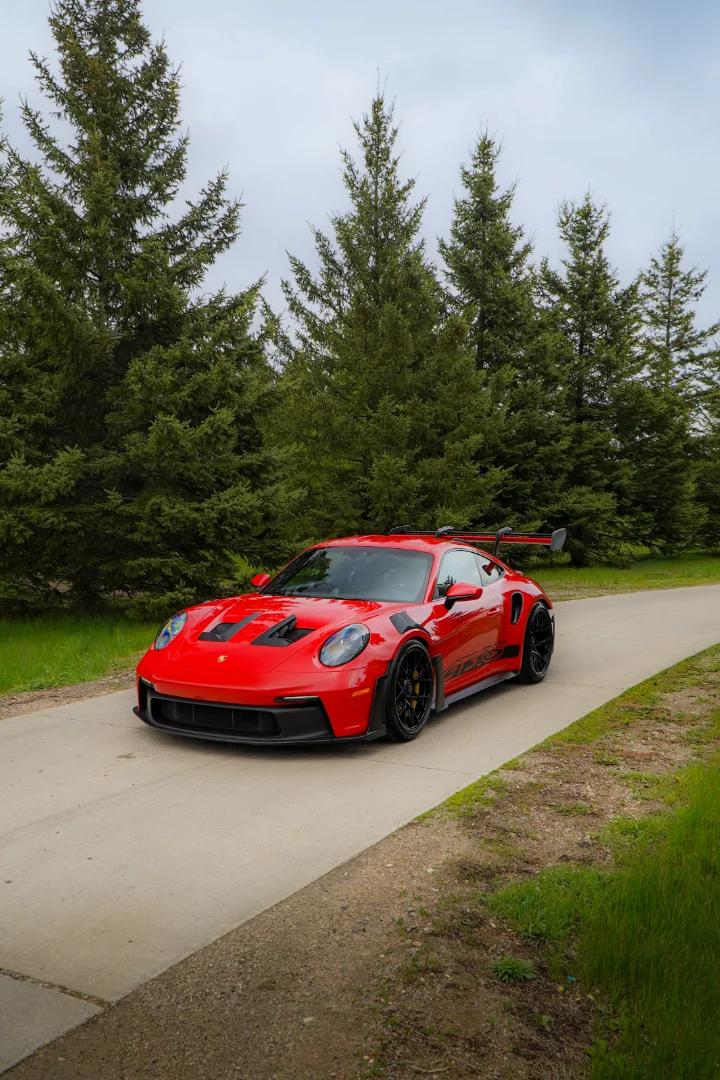
Storing a sports car, exotic, or collector vehicle for a Michigan winter involves more than parking it in a garage and throwing a cover over it. From battery maintenance and tire care to climate control, cleaning, and choosing the right storage facility, here’s how to prepare your vehicle for several months off the road and why proper storage matters.
How to Properly Store a Sports Car for the Michigan Winter
There’s a certain point every fall in Michigan when you realize the driving season is pretty much over.
The mornings get colder.
The roads start getting wet.
The leaves are everywhere.
And eventually, you start hearing about the first snowstorm.
For those of us with sports cars, exotics, motorcycles, or collector vehicles, that usually means it’s time to start thinking about winter storage.
And if you’ve spent a considerable amount of money buying, maintaining, and protecting a vehicle, the last thing you want to do is put it away incorrectly for five or six months.
We’ve worked with plenty of enthusiast-owned vehicles at Maverick Detailing, and one thing we’ve learned is that proper storage is just as much about preparation as it is about having a place to park.
A heated garage is great.
But there’s more to it than that.
Here’s what we’d do before storing a vehicle for a Michigan winter.
Why Proper Winter Storage Matters
Michigan winters aren’t exactly friendly to performance vehicles.
Between road salt, sand, freezing temperatures, snow, ice, and constant moisture, there’s a reason so many enthusiasts put their cars away for the season.
But even when a vehicle isn’t being driven, it still needs attention.
Batteries can discharge.
Tires can develop temporary flat spots.
Moisture can become a problem.
Rodents can find their way into storage areas.
And contaminants left on the paint can sit there for months.
The goal of winter storage is pretty simple.
You want the vehicle to come out in the spring in essentially the same condition it went in.
Ideally, with as little hassle as possible.
Step One: Thoroughly Clean the Vehicle Before Storage
This is one of the most important things we’d recommend.
Don’t put a dirty vehicle away for winter.
It sounds obvious, but you’d be surprised how often people drive their car one last time, park it in the garage, and decide they’ll clean it in the spring.
We’d rather start with a proper detail.
Get the bugs off the front bumper.
Remove brake dust from the wheels.
Clean the rocker panels.
Address road grime and contamination.
Clean the glass.
Pay attention to areas where dirt tends to collect.
If the vehicle has PPF or ceramic coating, use the appropriate cleaning methods for those surfaces.
And don’t forget the interior.
Food crumbs, spills, and other contamination aren’t things you want sitting inside a closed vehicle for several months.
A thorough interior and exterior detail is one of the easiest ways to start the storage season correctly.
Make Sure the Vehicle Is Completely Dry
This part is easy to overlook.
If you’re washing the vehicle immediately before storage, make sure it has adequate time to dry.
Water can collect around trim, mirrors, seals, badges, and other areas that aren’t immediately visible.
The same goes for the interior.
If carpets or upholstery have been deep cleaned, they should be completely dry before the vehicle is closed up for long-term storage.
You don’t want to trap unnecessary moisture inside a vehicle for several months.
That’s one reason we like preparing vehicles ahead of time instead of rushing everything on the day they’re being stored.
Battery Maintenance Is a Big Deal
If you’ve ever left a sports car sitting for a few months without a battery maintainer, you probably already know where this is going.
Dead battery.
Modern vehicles can have a surprising amount of electrical activity even when they’re turned off.
Security systems, computers, connected features, and other electronics can continue drawing power.
Over time, that can discharge the battery.
For vehicles that will be sitting for an extended period, an appropriate battery maintainer is one of the first things we’d recommend.
A quality maintainer is designed to monitor the battery and maintain an appropriate charge rather than continuously forcing power into it.
However, the correct equipment and connection procedure depend on the vehicle and battery chemistry.
Some modern vehicles have very specific requirements.
We’d always follow the manufacturer’s recommendations rather than assuming every car can use the same charger.
Should You Start Your Car Throughout Winter?
This is one of the most common winter-storage questions.
And our answer might surprise some people.
We generally wouldn’t recommend starting a stored vehicle every couple of weeks just to let it idle for five minutes.
Short idle sessions may not bring the engine, exhaust, and other components fully up to operating temperature.
That can introduce unnecessary moisture and condensation rather than helping.
If a vehicle is properly prepared for storage, it often doesn’t need to be started repeatedly throughout the winter.
Of course, every vehicle is different, and manufacturer-specific storage procedures should always take priority.
But simply starting the car to hear it run isn’t necessarily beneficial.
What Should You Do About the Tires?
Tires are another area worth thinking about.
When a vehicle sits in the same position for several months, the tires are supporting the weight of the car in exactly the same spots.
That can sometimes lead to flat spotting.
Depending on the tire, temperature, vehicle weight, and storage duration, those flat spots may be temporary or more persistent.
Before storage, we’d check the tire pressures and follow the vehicle and tire manufacturers’ recommendations.
Some owners also use tire cradles designed to distribute the load more evenly.
For certain collector vehicles or extended storage situations, other precautions may be appropriate.
But we’d be careful about automatically putting every car on jack stands.
Some vehicles have specific requirements for suspension loading and lifting points.
The best solution depends on the vehicle.
Don’t Forget About the Fuel
Fuel storage is another topic where the right answer depends on the vehicle and how long it’s being stored.
For many gasoline-powered vehicles, manufacturers recommend keeping an appropriate amount of fuel in the tank and may specify fuel stabilizer for extended storage.
The goal is to reduce fuel deterioration and related problems while the vehicle is sitting.
If a stabilizer is used, it should be compatible with the vehicle and fuel, and applied according to its instructions.
We wouldn’t recommend blindly adding products to every vehicle.
A modern exotic, a classic carbureted car, and a motorcycle may all have different storage recommendations.
This is one area where checking the owner’s manual is absolutely worthwhile.
Heated Storage vs. Unheated Storage
Now let’s talk about the actual building.
In Michigan, heated indoor storage can be a major advantage.
Not because every vehicle absolutely requires a heated garage, but because a controlled environment helps avoid some of the temperature extremes associated with winter.
A good storage facility should be clean, secure, and protected from the elements.
Temperature stability is helpful.
Moisture management is important.
And the condition of the building matters.
A poorly maintained heated building with significant moisture problems isn’t automatically better than a clean, dry, well-managed unheated facility.
The goal is a stable, dry environment that minimizes unnecessary exposure.
For expensive sports cars, exotics, and collector vehicles, that’s something we’d take seriously.
Why Humidity Matters
Temperature gets most of the attention when people talk about winter storage.
But humidity deserves attention too.
Excessive moisture can contribute to corrosion, mildew, and deterioration of certain materials.
On the other hand, extremely dry conditions can also be undesirable for some materials.
That’s why a well-managed indoor environment matters more than simply turning the heat up as high as possible.
We’re not trying to keep a car at tropical temperatures all winter.
We’re trying to keep it in a reasonably stable environment where moisture and extreme conditions are less likely to become problems.
What About Car Covers?
A good car cover can be useful in storage.
Especially when a vehicle is going to sit for several months.
It can help keep dust off the exterior and reduce the chance of incidental contact with the finish.
But not all covers are created equal.
We’d want something designed for indoor use, appropriate for the vehicle, and made from material that won’t unnecessarily abrade the finish.
And we would never recommend putting a cover over a dirty vehicle.
Dust and contamination trapped between the cover and paint can create scratches when the cover moves or is removed.
Clean vehicle first.
Appropriate cover second.
Security Should Be Part of the Conversation
If you’re storing a valuable vehicle away from your home, security is obviously important.
You should know where the vehicle is going.
Who has access to it.
Whether the building is monitored.
And what procedures are in place to protect the vehicles being stored.
For an exotic or collector car, we’d want more than just an empty warehouse with a lock on the door.
Security cameras, alarm systems, controlled access, and responsible facility management all matter.
We’d also recommend confirming insurance coverage and understanding the storage agreement before leaving a vehicle anywhere.
Don’t assume your personal auto policy or the facility’s policy automatically covers every possible situation.
What If You Want to Drive the Car During Winter?
This is something that comes up more often than you’d think.
Not every Michigan winter is nonstop snow and salt.
Sometimes we get a stretch of clear weather in December or February and you start thinking about taking the car out.
But we’d be cautious.
Even if the road looks dry, there may still be leftover salt and debris.
And certain summer-performance tires aren’t designed for low temperatures, regardless of whether there’s snow on the pavement.
If you’re planning to drive a stored vehicle during winter, make sure the road conditions, tire specifications, and temperatures are appropriate.
We’d also consider how the vehicle will be cleaned afterward.
The whole point of storing a nice car is to preserve its condition.
You don’t want one winter drive to undo all that preparation.
When Should You Put Your Car Into Storage?
For most enthusiasts in West Michigan, October and November are when the conversation really starts.
The exact timing depends on the weather.
Some people store their cars as soon as temperatures consistently drop.
Others wait until the first road treatments are applied.
And some will drive right up until the first major snow.
There’s no single perfect date.
But we do think it’s better to have a storage plan before winter arrives.
Waiting until the last minute can make everything more stressful than it needs to be.
What About Motorcycles?
Motorcycles deserve many of the same considerations.
Battery maintenance.
Fuel preparation.
Tire care.
Cleaning.
Moisture management.
Security.
Depending on the motorcycle, there may also be additional manufacturer-specific recommendations.
For example, some bikes benefit from particular tire-support arrangements during extended storage.
And motorcycles can be especially vulnerable to cosmetic deterioration when they’re stored dirty or in damp environments.
A clean, properly prepared motorcycle in a secure indoor facility is a much better situation than leaving it exposed to months of Michigan weather.
What We’d Do Before Storing Our Own Sports Car
If we were putting away a Porsche, Ferrari, Corvette, BMW M car, or another enthusiast vehicle for the winter, we’d keep the process straightforward.
First, we’d get the vehicle thoroughly detailed.
We’d make sure the exterior and interior were completely clean and dry.
We’d inspect the vehicle for anything that should be addressed before storage.
We’d check tire pressures and follow the manufacturer’s recommendations for extended parking.
We’d prepare the fuel system as appropriate.
We’d connect the correct battery maintainer.
Then we’d put the vehicle into a clean, secure, dry, temperature-controlled environment.
And we’d leave it properly stored until it was time to bring it back out.
No unnecessary idling.
No constant moving it around.
No exposing it to winter weather just because we want to hear the exhaust.
Just proper preparation and storage.
Introducing Maverick Reserve
This is actually one of the reasons we created Maverick Reserve.
Through Maverick Detailing, we’ve had the opportunity to work with some incredible vehicles and meet owners who genuinely care about keeping them in excellent condition.
And we realized that for a lot of those owners, winter storage was another piece of the ownership experience that could be improved.
They didn’t necessarily want to leave their car in a random warehouse.
They wanted somewhere clean, secure, and properly maintained.
Somewhere their vehicle would actually be looked after.
That’s the idea behind Maverick Reserve.
Our private indoor vehicle storage facility in Byron Center, Michigan, is designed for enthusiasts who want a more personal storage experience.
The facility features heated, climate-controlled storage, security cameras, an alarm system, and battery-maintenance support.
And because we also operate Maverick Detailing, owners have access to professional vehicle cleaning and appearance-care services when needed.
It’s not about filling a building with as many cars as possible.
It’s about offering a storage experience we’d feel comfortable using for our own vehicles.
More Than Just a Parking Spot
One thing we wanted Maverick Reserve to offer was convenience.
For some owners, storage is simple.
They drop the vehicle off in the fall and pick it up in the spring.
For others, the needs are a little different.
Maybe they want the car professionally cleaned before storage.
Maybe they want it detailed before spring pickup.
Maybe they need occasional access or additional vehicle-care services.
That’s where having a detailing business connected to the storage facility becomes valuable.
We can help coordinate those services rather than making the owner handle everything separately.
And for owners interested in a more involved experience, we also offer additional white-glove vehicle-care options.
The goal is to make ownership easier.
Is Professional Vehicle Storage Worth It?
That depends on the vehicle and the owner.
If you already have a clean, secure, heated garage at home with plenty of room, you might not need professional storage.
And that’s completely fine.
But if you’re short on garage space, own multiple vehicles, or want a more controlled environment for a valuable car, professional storage can be worth considering.
For some people, it’s about protecting the vehicle.
For others, it’s about freeing up space at home.
And for certain owners, it’s simply about the convenience of having someone help manage the vehicle during the months it isn’t being driven.
There’s no universal answer.
But if you care about the condition of your vehicle, storage deserves the same attention as the other parts of maintaining it.
Getting Your Car Ready for Spring
Proper winter storage makes spring a lot easier.
Instead of discovering a dead battery, neglected interior, or other avoidable issues, you’re starting with a vehicle that was prepared correctly.
Before putting the vehicle back into regular use, we’d still recommend checking the tire pressures, fluids, battery condition, and any manufacturer-recommended items.
And of course, making sure the roads are actually ready.
In Michigan, one warm day in March doesn’t necessarily mean winter is over.
Sometimes the smartest thing you can do is wait another week.
Heated Sports Car & Exotic Vehicle Storage in Byron Center, Michigan
If you’re looking for heated indoor car storage near Grand Rapids, Ada, Byron Center, Hudsonville, Grandville, Holland, Zeeland, Rockford, Grand Haven, or the surrounding West Michigan area, Maverick Reserve may be a great fit.
Whether you’re storing a Porsche, Ferrari, Corvette, BMW, Lamborghini, classic car, motorcycle, or another enthusiast vehicle, we’d be happy to discuss your storage needs.
We can also help prepare your vehicle for storage through Maverick Detailing, including professional detailing, paint correction, ceramic coating, Paint Protection Film, and other vehicle-care services.
If you’re interested in learning more about Maverick Reserve, reach out to us.
Tell us what you’re storing, how long you’re planning to store it, and what kind of access or additional services you might need.
We’ll walk you through the options and help determine whether it’s a good fit.
Maverick Detailing — Protect Your Investment.

More Articles
Paint Protection Film in Byron Center & West Michigan : Everything You Need to Know
If you’re considering Paint Protection Film (PPF) for your vehicle, understanding how it works and why it’s beneficial in West Michigan can help you make the right decision. In this guide, we’ll explain what PPF is, why it’s become one of the best ways to protect your investment, and why so many drivers in Byron Center, Ada, and the surrounding areas are choosing it for their vehicles.

Is Ceramic Coating Worth It in Michigan for Long Term Protection
A lot of people ask if ceramic coating is actually worth it, especially with Michigan weather. The short answer is yes, but only if it’s done right. Here’s what it really does and why it makes a difference.

How to Protect Your Car From Michigan Road Salt (What Actually Works)
If you live in Michigan, road salt is one of the biggest things destroying your vehicle. Most people rinse it off, but that’s not enough. Here’s what actually works to protect your paint and keep your car from getting beat up every winter.