Full-Front PPF vs. Full-Body PPF: How Much Protection Does Your Vehicle Actually Need?
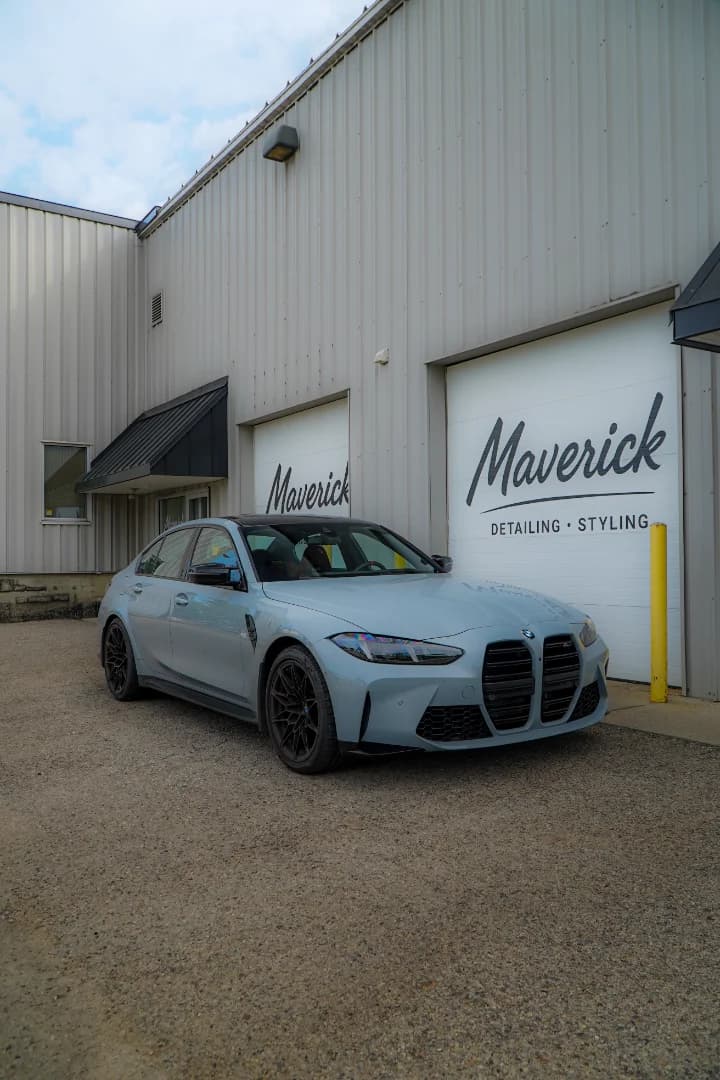
Once you’ve decided Paint Protection Film is right for your vehicle, the next question is usually how much of the vehicle you should actually protect. Full-front and full-body PPF both have their place, but the right choice depends on how you drive, what you own, and how particular you are about keeping your paint in great condition. Here’s how we help our customers in Byron Center, Ada, and throughout West Michigan decide.
So you’ve decided you want Paint Protection Film.
Now comes the harder question:
How much PPF do you actually need?
This is something we talk through with customers at Maverick Detailing all the time.
Some people come in convinced they need the entire vehicle wrapped. Others only want the front bumper protected. And a lot of people honestly have no idea—they just bought a new vehicle, want to keep it looking good, and don’t want to spend money protecting areas that don’t really need it.
The truth is, there isn’t one PPF package that’s right for everybody.
A vehicle that spends every day commuting on US-131 has completely different needs than a Porsche that comes out on nice weekends. A truck driving through Michigan winters sees different abuse than a collector car that spends most of its life indoors.
That’s why we look at how the vehicle is actually going to be used before recommending how much coverage makes sense.
Let’s break it down.
What Does Full-Front PPF Cover?
A full-front Paint Protection Film package is exactly what it sounds like: we’re protecting the areas at the front of the vehicle that take the majority of the abuse while driving.
Depending on the vehicle and package, this generally includes areas such as:
Full front bumper
Full hood
Full front fenders
Mirror caps
Other high-impact front-end areas when appropriate
The biggest advantage here is pretty simple.
You’re putting protection exactly where you’re most likely to need it.
Think about what happens when you’re driving 70 mph behind traffic on US-131 or I-196. Rocks, sand, gravel, bugs, and road debris aren’t usually hitting the middle of your rear door first.
They’re hitting the front of the vehicle.
Your bumper takes it.
Your hood takes it.
Your fenders and mirrors take it.
That’s why full-front PPF is such a popular option for daily-driven vehicles.
Why We Usually Prefer a Full Front Over a Partial Front
There’s another option you’ll sometimes see called a partial-front package.
That normally means protecting the bumper and only a portion of the hood and fenders.
There’s nothing inherently wrong with doing that, and there are situations where it makes sense. But if someone is serious about protecting a new vehicle, we generally prefer protecting the entire panel when possible.
One reason is coverage.
A rock doesn’t know where your PPF stops.
We’ve seen vehicles take chips surprisingly far up the hood. Covering the complete hood and fenders gives you significantly more protection than only covering the first section.
The second reason is appearance.
With a partial installation, the film has to stop somewhere in the middle of the panel. That can leave a visible line across the hood or fender.
With a full-panel installation, we’re able to make the protection look much more natural and seamless.
If it were our vehicle and we were already investing in protecting the front end, we’d usually rather do the complete front properly.
What About Rocker Panels and Other High-Impact Areas?
This is where PPF becomes a lot more vehicle-specific.
Not every vehicle throws debris in exactly the same places.
Performance cars with wide tires can absolutely hammer their rocker panels and rear quarter areas.
Trucks and SUVs can throw road debris along the lower sides of the vehicle.
Certain body designs have areas that stick out farther and naturally take more abuse.
That’s why sometimes the best package isn’t simply “full front” or “full body.”
It might be a full front plus rocker panels.
It might include an impact area behind the rear wheels.
Maybe there’s a carbon-fiber piece or another vulnerable area we think should be protected.
That’s where working with an installer who actually looks at the vehicle matters.
We’re not interested in just clicking a package on a computer and installing whatever it tells us.
We want to look at the vehicle, understand how you’re going to use it, and protect the areas that actually make sense.
So What Does Full-Body PPF Cover?
Full-body Paint Protection Film takes everything a step further.
Instead of protecting only the highest-impact areas, we’re protecting essentially the entire painted exterior of the vehicle.
That means the front end, doors, quarter panels, rocker areas, rear sections, and the other painted surfaces that can be covered.
The result is a much more complete layer of physical protection.
Now instead of worrying only about rock chips on the front end, you also have protection against light scratches, scuffs, road debris, and everyday wear on the rest of the vehicle.
For the right owner, it’s awesome.
But we also don’t think everybody needs it.
Who Should Consider Full-Body PPF?
This is where we like to have an honest conversation.
If you bought a vehicle that you’re extremely particular about and you want to preserve as much of the original finish as possible, full-body PPF starts making a lot of sense.
We especially like it for certain situations.
Maybe you just bought the Porsche, Corvette, BMW M car, or other enthusiast vehicle you’ve wanted for years.
Maybe it’s a rare vehicle.
Maybe it’s a special color that would be difficult to perfectly match if a panel ever needed paintwork.
Maybe you plan on owning the vehicle for a very long time.
Or maybe you’re simply the type of person who notices every tiny scratch and wants as much peace of mind as possible.
There’s nothing wrong with that.
We’re car people too. We get it.
For those customers, full-body PPF can be an incredible option because you’re no longer choosing which panels you care about protecting.
You’re protecting the vehicle as a whole.
Does a Normal Daily Driver Need Full-Body PPF?
Not necessarily.
And this is where we probably differ from a shop that’s just trying to sell the biggest package possible.
If you bring us a daily-driven SUV and tell us your main concern is rock chips from driving between Byron Center and Grand Rapids every day, we probably don’t need to immediately tell you to wrap every painted panel.
A properly planned full-front package may accomplish exactly what you’re trying to accomplish.
Then we can ceramic coat the rest of the vehicle to make maintenance easier and provide additional environmental protection.
That’s a combination we really like for daily drivers.
PPF handles the areas most likely to take physical impacts.
Ceramic coating helps keep the rest of the vehicle easier to clean, glossier, and better protected from environmental contamination.
Two different products doing two different jobs.
Full-Body PPF Isn’t Just for Exotic Cars
On the other hand, we don’t think you need a six-figure vehicle to justify full-body protection.
Sometimes the vehicle just matters to you.
We’ve worked on everything from enthusiast vehicles to trucks and daily drivers where the owner cares more about the condition than someone with a much more expensive car.
That’s really what matters.
If you just bought a new truck and plan to keep it for ten years, full-body protection might make perfect sense.
If you bought an expensive sports car that you’re planning to trade next summer and barely drive, maybe you don’t need as much coverage as you’d expect.
The price of the vehicle doesn’t automatically determine the right protection package.
How you use it does.
Michigan Makes This Decision a Little Different
We also have to be realistic about where we live.
West Michigan isn’t exactly gentle on vehicles.
We have winter salt and sand.
We have potholes.
We have loose gravel after road repairs.
We have construction seemingly everywhere during the warmer months.
And then we have highways like US-131, M-6, and I-196 where your vehicle spends plenty of time traveling at highway speeds behind other traffic.
For customers around Byron Center and Ada—and throughout Grand Rapids, Hudsonville, Holland, Zeeland, Grandville, Rockford, and Grand Haven—that’s something we take into consideration when recommending PPF coverage.
A full-front package makes a lot of sense here because the front of your vehicle is constantly exposed to debris.
For vehicles with wider tires, aggressive body lines, or lots of highway miles, we may recommend adding protection to other high-impact areas as well.
What Would We Do If It Were Our Own Vehicle?
This is usually the easiest way for us to answer the question.
If we bought a brand-new daily driver tomorrow and wanted to protect it without going overboard, we’d strongly consider a full-front PPF package.
We’d protect the bumper, hood, fenders, mirrors, and any other areas on that particular vehicle that we know are likely to take abuse.
Then we’d consider ceramic coating the vehicle to make everything easier to maintain.
If we bought a special vehicle that we planned to keep for years and wanted to preserve as close to perfect as possible?
We’d start seriously considering full-body PPF.
It’s not about choosing the most expensive option.
It’s about matching the protection to the vehicle.
Installation Matters Just as Much as Coverage
There’s one more thing that’s easy to overlook when comparing PPF packages.
More coverage doesn’t automatically mean better protection if the installation isn’t done correctly.
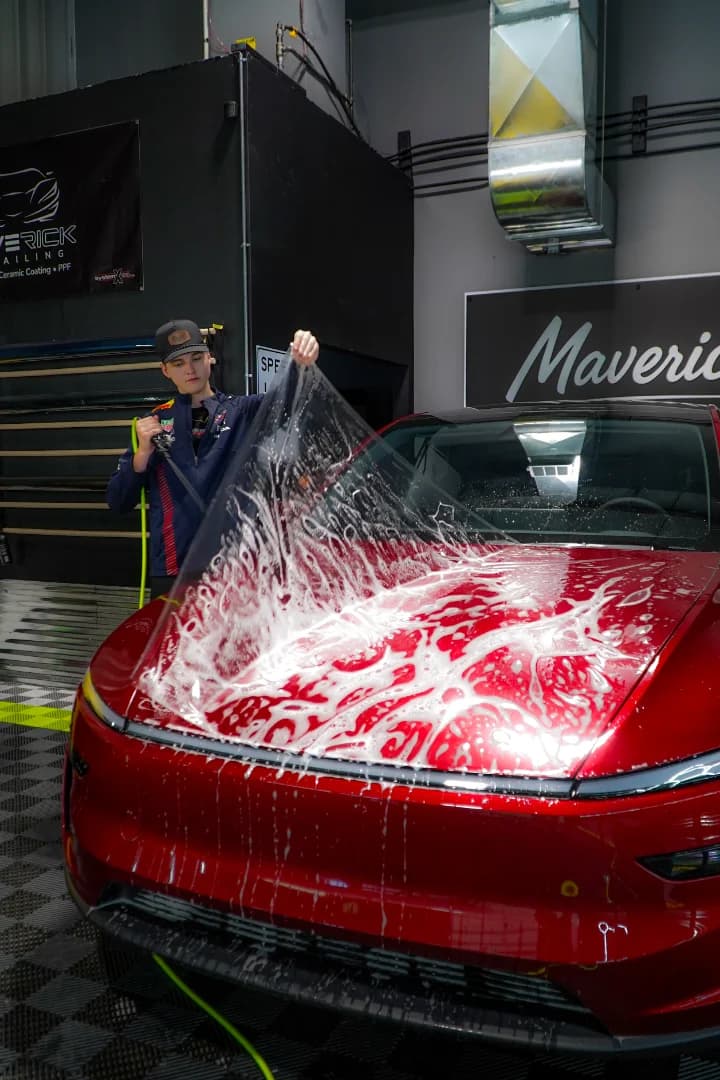
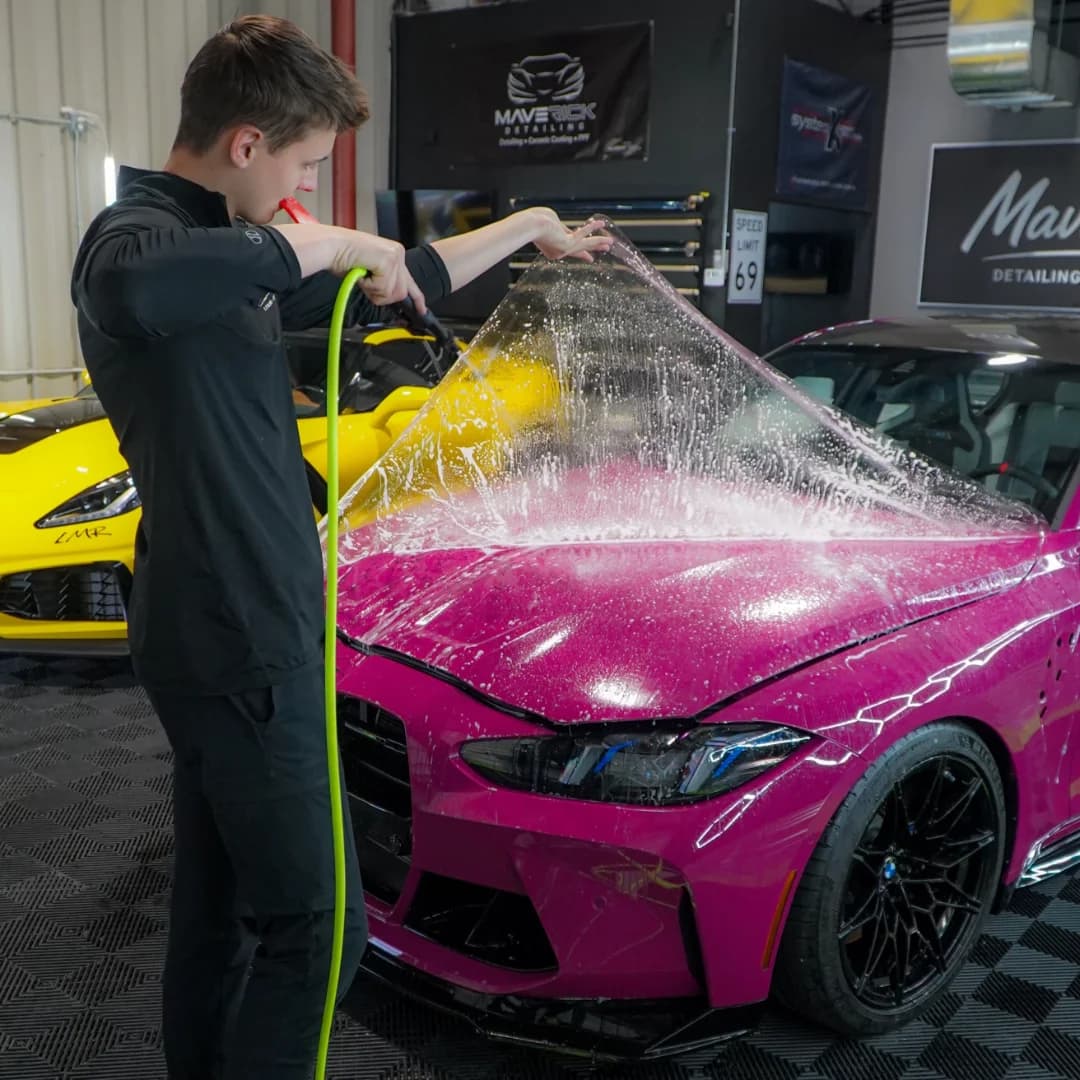
PPF installation takes patience.
Edges matter.
Corners matter.
Alignment matters.
Surface preparation matters.
The condition of the paint underneath the film matters.
At Maverick Detailing, we’re not interested in seeing how many vehicles we can push through the shop in a week.
We genuinely enjoy working on cars, and we approach every vehicle like it belongs to us.
Sometimes that means taking extra time on an edge that most people would never notice.
Sometimes it means recommending less coverage because that’s honestly all the customer needs.
The experience and final result matter more to us than simply getting another vehicle out the door.
Full Front or Full Body: The Simple Answer
If you’ve made it this far and still aren’t sure, here’s the easiest way we’d explain it.
Full-front PPF is a great option if your biggest concern is protecting your vehicle from the rock chips and road debris it encounters during normal driving.
Full-body PPF makes more sense if you want the highest level of paint protection possible and care about preserving essentially the entire exterior finish.
And there’s plenty of room between those two options.
Sometimes the perfect package is full front plus rockers.
Sometimes it’s additional high-impact areas.
Sometimes it’s full-front PPF combined with ceramic coating.
That’s why we’d rather build the package around the vehicle instead of forcing the vehicle into a package.
Protecting Vehicles Throughout Byron Center and West Michigan
If you’re considering Paint Protection Film for a new vehicle, don’t feel like you need to know exactly what package you want before contacting us.
That’s what we’re here for.
Tell us what you drive, how you use it, what you’re trying to protect, and how particular you are about keeping it looking new.
We’ll walk you through what we’d recommend if the vehicle were sitting in our own garage.
Maverick Detailing provides professional Paint Protection Film, ceramic coating, paint correction, window tint, detailing, and automotive styling for customers throughout Byron Center, Ada, Grand Rapids, Hudsonville, Holland, Zeeland, Grandville, Rockford, Grand Haven, and the surrounding West Michigan area.
If you’re ready to protect your vehicle, reach out to Maverick Detailing and let’s figure out the right level of PPF coverage for you.
Related Services
More Articles
Paint Protection Film in Byron Center & West Michigan : Everything You Need to Know
If you’re considering Paint Protection Film (PPF) for your vehicle, understanding how it works and why it’s beneficial in West Michigan can help you make the right decision. In this guide, we’ll explain what PPF is, why it’s become one of the best ways to protect your investment, and why so many drivers in Byron Center, Ada, and the surrounding areas are choosing it for their vehicles.

Is Ceramic Coating Worth It in Michigan for Long Term Protection
A lot of people ask if ceramic coating is actually worth it, especially with Michigan weather. The short answer is yes, but only if it’s done right. Here’s what it really does and why it makes a difference.

How to Protect Your Car From Michigan Road Salt (What Actually Works)
If you live in Michigan, road salt is one of the biggest things destroying your vehicle. Most people rinse it off, but that’s not enough. Here’s what actually works to protect your paint and keep your car from getting beat up every winter.