Does Your Car Need Paint Correction Before Ceramic Coating?
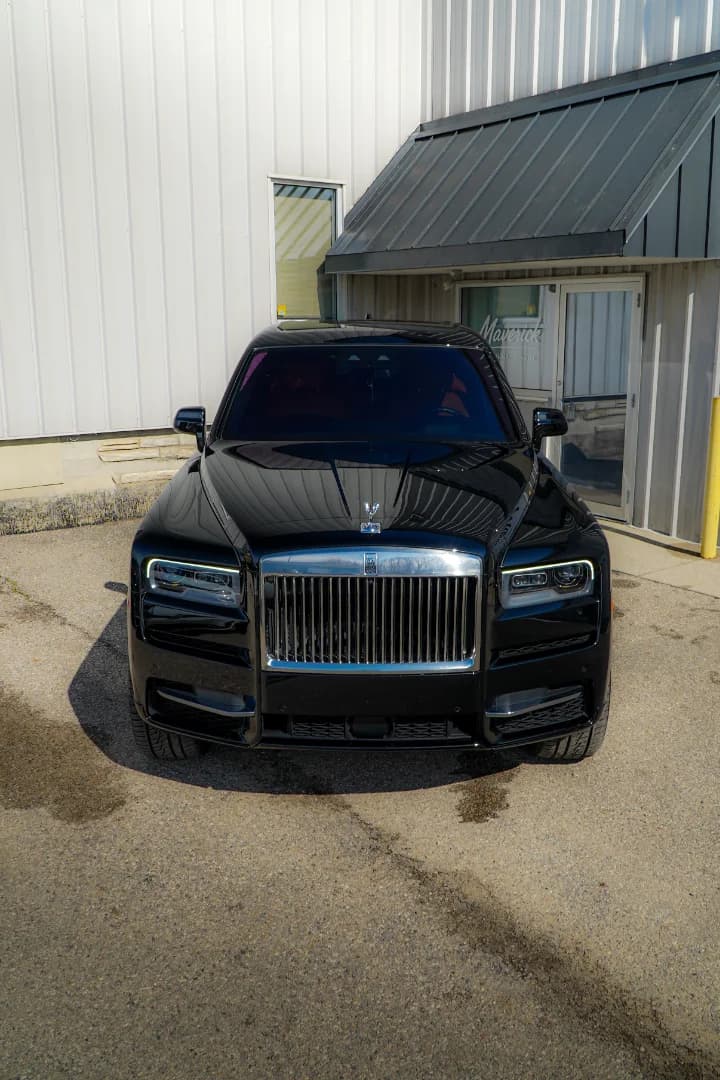
Paint correction and ceramic coating are often sold together, but does every vehicle actually need to be polished before it’s coated? Here’s how we determine what level of correction a vehicle needs, what can actually be removed from the paint, and why proper preparation matters just as much as the ceramic coating itself.
This is one of the most common questions we get when someone is looking into ceramic coating:
“Do I actually need paint correction first?”
The short answer?
Sometimes.
There’s a misconception that every vehicle needs a massive multi-step paint correction before ceramic coating can be installed.
We don’t really look at it that way.
At Maverick Detailing, we’d rather inspect the vehicle, look at the condition of the paint, understand what the owner expects, and then do what actually makes sense.
Some vehicles need significant correction.
Some need a light polish.
Some brand-new vehicles barely need anything.
The goal isn’t to perform the most expensive process possible.
The goal is to get the paint into the condition you want before we protect it.
Here’s how that works.
What Is Paint Correction?
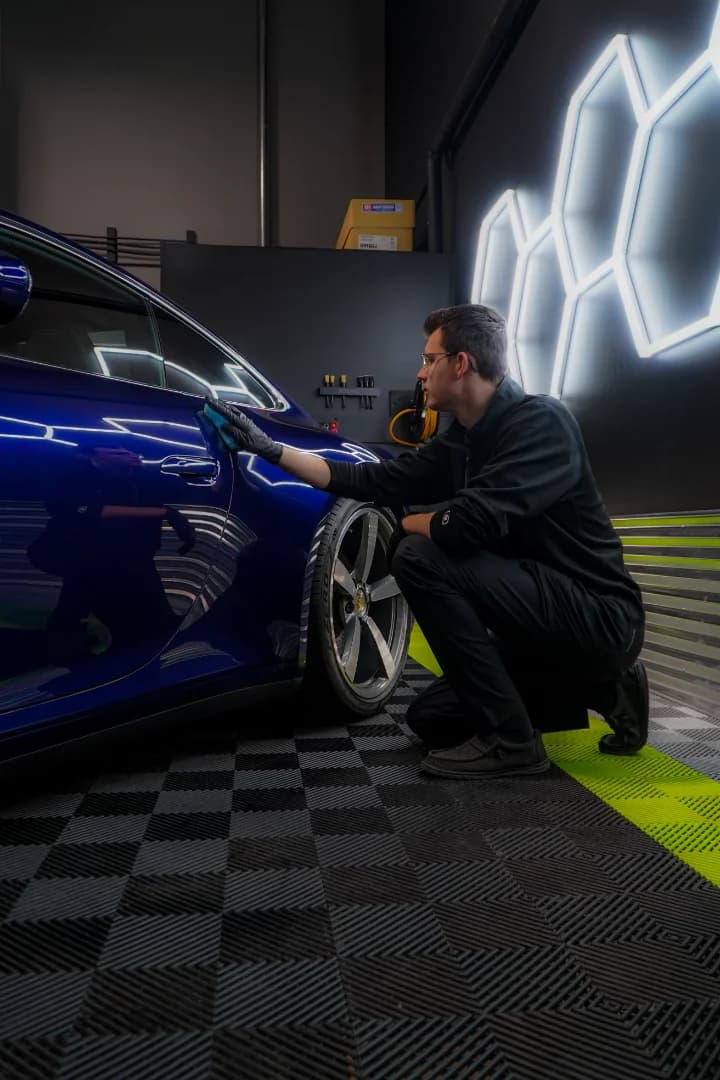
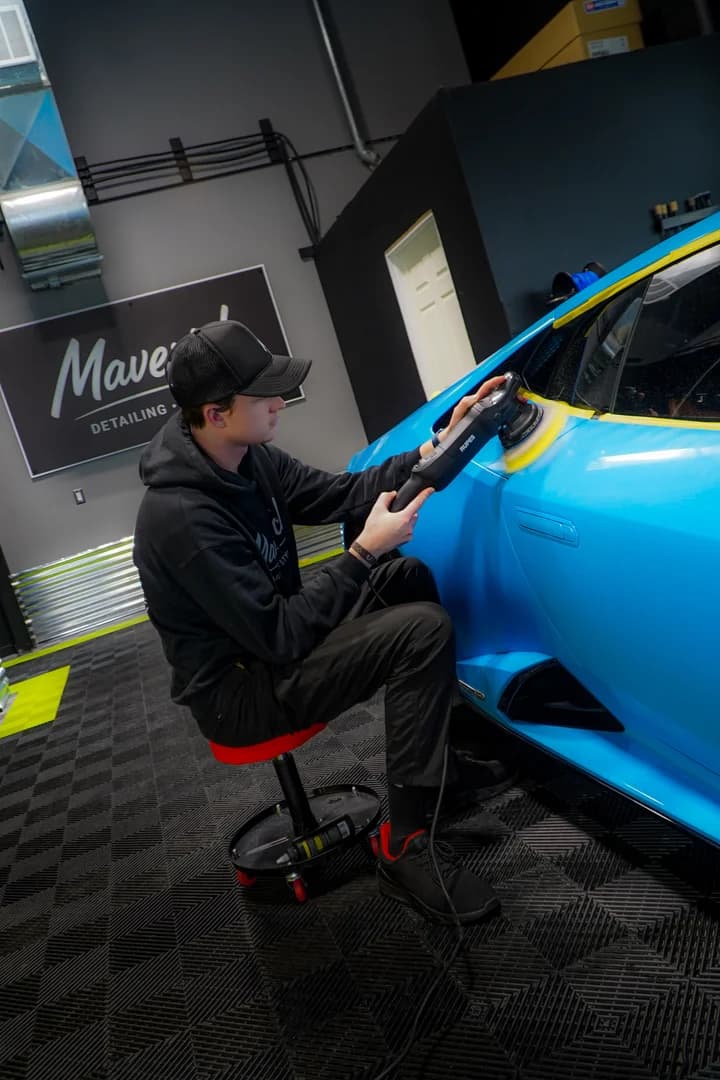
Paint correction is the process of mechanically polishing the vehicle’s clear coat to remove or reduce defects and restore clarity, gloss, and depth.
Those defects can include things like:
Swirl marks
Light scratches
Water spotting
Haze
Oxidation
Wash marks
Light etching
Other imperfections in the clear coat
When people hear “paint correction,” they sometimes picture us filling scratches with something.
That’s not really what’s happening.
We’re carefully refining the clear coat itself.
Done correctly, the difference can be huge.
Paint that looked dull or covered in swirls under sunlight can become significantly clearer, deeper, and glossier.
Where Do Swirl Marks Actually Come From?
Usually, normal life.
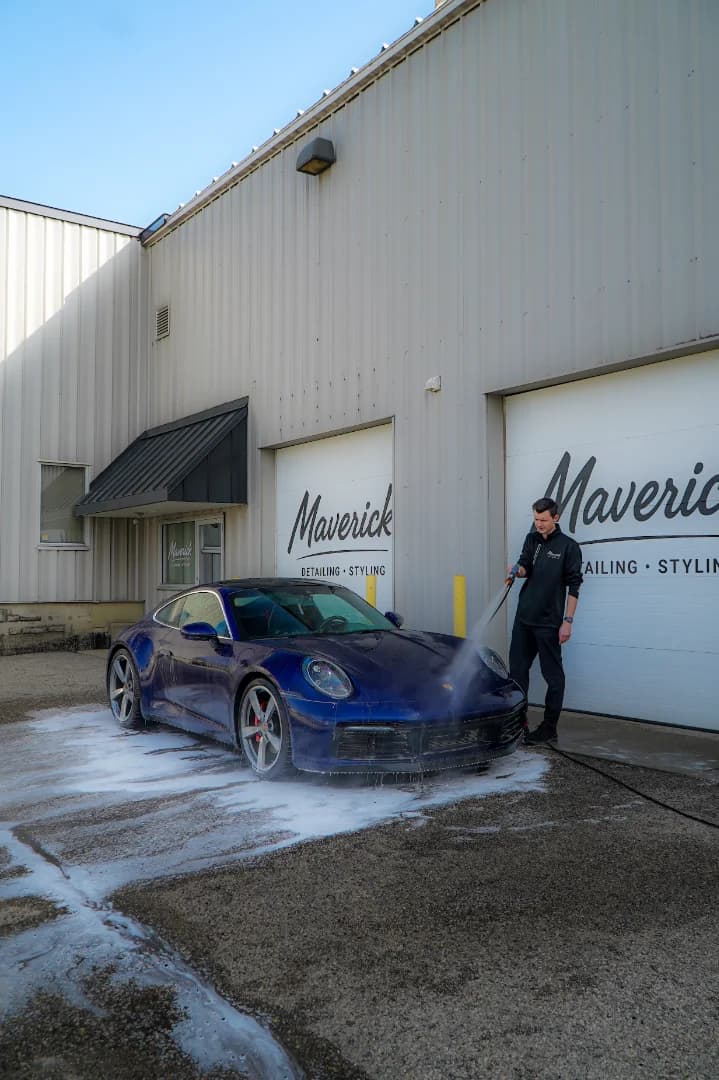
One of the biggest causes is improper washing.
Automatic brush car washes are a major example.
Those brushes and materials are touching vehicle after vehicle throughout the day, picking up dirt and contamination along the way.
Then they’re dragged across your paint.
Even hand washing can create swirls if dirty towels, wash mitts, or poor techniques are used.
Over time, those tiny defects accumulate.
You might not notice them in your garage.
Then the sun hits the side of the vehicle at the right angle and suddenly they’re everywhere.
That’s one of the things paint correction is designed to improve.
Why Correct the Paint Before Ceramic Coating?
Because ceramic coating isn’t paint correction.
A coating can add gloss and improve the appearance of a vehicle, but it doesn’t magically remove scratches and swirl marks underneath it.
If the paint has defects before the coating goes on, those defects are still there afterward.
That’s why preparation matters.
Think of ceramic coating as the final protective step.
Before we get there, we want the surface clean, decontaminated, properly prepared, and looking the way we want it to look.
If the vehicle needs correction, this is the time to do it.
Does Every Car Need a Multi-Step Correction?
No.
And this is something we think is important to be clear about.
Not every vehicle needs to be chased to absolute perfection.
Let’s say you bring us a daily-driven SUV with some light swirl marks.
You want it significantly cleaner and glossier, but you’re also going to drive it every day through Michigan weather.
A quality single-stage polish may give you exactly the result you’re looking for.
Going through an aggressive multi-step correction just to chase every last defect might not make sense for you.
Now take a black enthusiast car that the owner keeps under perfect lighting and wants as close to flawless as reasonably possible.
That’s a different conversation.
The right correction depends on the vehicle, the condition, and the owner’s expectations.
What’s the Difference Between a One-Step and Multi-Step Paint Correction?
The terminology can sound more complicated than it really is.
A one-step correction generally uses a single polishing process to improve the paint.
The goal is usually to remove or reduce lighter defects while increasing gloss and clarity.
For a lot of vehicles, this can make a dramatic difference.
A multi-step correction goes further.
We may use a more aggressive correction stage first to address heavier defects, followed by a refining stage to bring back maximum clarity and finish.
That takes considerably more time, but it can also achieve a higher level of correction when the paint condition calls for it.
Neither one is automatically “better.”
The correct process is the one that gets the vehicle where it needs to be without unnecessarily removing clear coat.
Can Paint Correction Remove Every Scratch?
No.
And anyone promising that should make you a little skeptical.
Paint correction can do an incredible amount, but there are limits.
If a scratch is too deep into—or through—the clear coat, safely polishing it completely away may not be possible.
Sometimes the smartest move is to improve a defect rather than chase it until we’re compromising the paint around it.
That’s especially important because automotive clear coat isn’t unlimited.
Every time paint is aggressively corrected, material is being removed.
Our goal isn’t to see how much clear coat we can take off.
It’s to achieve the best reasonable result while preserving the paint.
What About Deep Scratches?
Deep scratches need to be evaluated individually.
Some can be dramatically improved.
Others may require touch-up work or repainting if the goal is complete removal.
There’s no polish or ceramic coating that can magically replace missing paint.
We’d rather tell someone that upfront than promise a result that isn’t realistic.
That’s part of how we approach detailing at Maverick.
We’re not trying to sell a fantasy.
We want you to understand exactly what can be improved and what can’t before we start.
Does a Brand-New Car Need Paint Correction?
Sometimes, yes.
“Brand new” doesn’t always mean “perfect.”
We’ve worked on vehicles with extremely low mileage that already had defects in the paint.
Think about everything that happens before you take delivery.
The vehicle is manufactured.
Transported.
Stored.
Handled.
Possibly washed several times.
Prepared at the dealership.
Maybe it’s been sitting outside.
Any one of those steps can introduce light defects.
We’ve seen new vehicles with swirl marks, water spots, light scratches, haze, and other imperfections.
That doesn’t mean every new vehicle needs a huge correction.
It means we inspect it instead of assuming.
What If My New Vehicle Already Looks Perfect?
Then that’s great.
We’re not going to intentionally create unnecessary work.
If the paint is already in excellent condition, it may only need proper washing, decontamination, and very light polishing—or whatever level of preparation is appropriate for the coating being installed.
This is where we think customized packages make more sense than forcing every vehicle through the exact same process.
Your paint should determine the preparation.
Not a package name.
Why Black Paint Makes Everything More Obvious
Anyone who has owned a black vehicle already knows where this is going.
Black paint can look incredible.
It can also show absolutely everything.
Swirls.
Dust.
Water spots.
Haze.
Light scratches.
Under direct sunlight or strong shop lighting, defects that are nearly invisible on lighter colors can jump out immediately on black.
That’s why correction can be especially rewarding on darker vehicles.
When properly polished, black paint can have an incredible amount of depth and clarity.
But it also makes proper maintenance after correction even more important.
Ceramic Coating Won’t Prevent Swirl Marks
This is another misconception worth clearing up.
Ceramic coating makes a vehicle easier to clean and provides excellent environmental protection.
It does not mean you can wash the vehicle however you want without ever scratching it.
If you take a freshly corrected and ceramic-coated vehicle through an aggressive brush wash every week, you can still introduce defects.
That’s why we spend time explaining maintenance to customers.
The coating helps.
Proper washing keeps the finish looking the way it did when it left our shop.
Those two things work together.
Why Preparation Matters So Much
A ceramic coating is only part of the final result.
Before we ever open the coating bottle, there can be hours of work involved.
Washing.
Decontamination.
Inspecting the paint.
Polishing where necessary.
Cleaning the surface.
Making sure it’s ready for the coating to properly bond.
That preparation isn’t the flashy part people see on Instagram.
But it’s one of the most important parts of the entire job.
You could buy an incredible ceramic coating and still get a mediocre finished product if the preparation and installation aren’t done correctly.
That’s why choosing the shop matters just as much as choosing the product.
Paint Correction Is Where Experience Really Shows
Polishing paint isn’t just about grabbing a machine and going around the vehicle.
Different paints behave differently.
Some are harder.
Some are softer.
Different defects require different approaches.
Different pads and polishing combinations produce different results.
And there’s always a balance between achieving correction and preserving the integrity of the clear coat.
Sometimes the best decision is to keep working an area.
Sometimes the best decision is to stop.
Knowing the difference matters.
What We Do at Maverick Detailing
When a vehicle comes to us for ceramic coating, we don’t immediately decide how much correction it needs based on its age.
We look at the vehicle.
We inspect the paint under proper lighting.
We talk to the owner.
What bothers you about it?
How perfect do you want it?
Is this your daily driver?
Is it a weekend car?
Are you planning on keeping it for ten years?
Are you mainly looking for easier maintenance, or are you chasing the best possible finish?
Those answers matter.
Our goal isn’t to push every customer into the biggest correction package.
It’s to figure out what we’d do if the vehicle belonged to us.
What We’d Do on Our Own Vehicle
If we were ceramic coating one of our own vehicles, we’d start by inspecting the paint honestly.
If it had light swirls and we could get the finish where we wanted with a lighter correction, that’s what we’d do.
If it had heavier defects and it was a vehicle we cared about getting as close to perfect as reasonably possible, we’d go further.
But we wouldn’t aggressively polish perfectly good paint just because we could.
Once the paint was where we wanted it, we’d protect it.
That’s really the entire philosophy.
Correct what needs correcting. Preserve what doesn’t. Then protect the finished result.
Paint Correction and PPF
Paint correction also comes into the conversation when we’re installing Paint Protection Film.
PPF is transparent.
If there’s an obvious defect underneath it, installing clear film doesn’t make that defect disappear.
That’s why we inspect and prepare painted surfaces before installing film.
Especially when we’re doing larger PPF packages or full-body protection, we want the finish underneath the film to look right before everything gets covered.
Again, preparation matters.
How Do You Know What Your Vehicle Needs?
You really don’t need to figure that out yourself.
That’s our job.
You don’t need to call and tell us:
“I need a two-step correction with this pad, this compound, and this coating.”
Just tell us about the vehicle.
Tell us what bothers you.
Tell us what you’re trying to accomplish.
We’ll look at the paint and explain what we think makes sense.
Sometimes that’s a significant correction.
Sometimes it’s something much simpler.
Either way, we’d rather recommend the appropriate amount of work than sell work the vehicle doesn’t need.
Paint Correction & Ceramic Coating in Byron Center, Ada and West Michigan
If your vehicle has swirl marks, scratches, haze, water spots, or paint that simply doesn’t look as good as it used to, paint correction can make a dramatic difference.
And if you’re considering ceramic coating, getting the paint where you want it before installing the coating is one of the most important parts of the process.
Maverick Detailing provides professional paint correction, ceramic coating, Paint Protection Film, window tint, detailing, and automotive styling for customers throughout Byron Center, Ada, Grand Rapids, Hudsonville, Holland, Zeeland, Grandville, Rockford, Grand Haven, and the surrounding West Michigan area.
If you’re not sure whether your vehicle needs a one-step polish, a more involved paint correction, or barely any correction at all, bring it by or send us a message.
We’ll take a look at it and tell you what we’d actually recommend.
No unnecessary work. No one-size-fits-all package.
Just getting the vehicle right and protecting it properly.
Maverick Detailing — Protect Your Investment.
More Articles
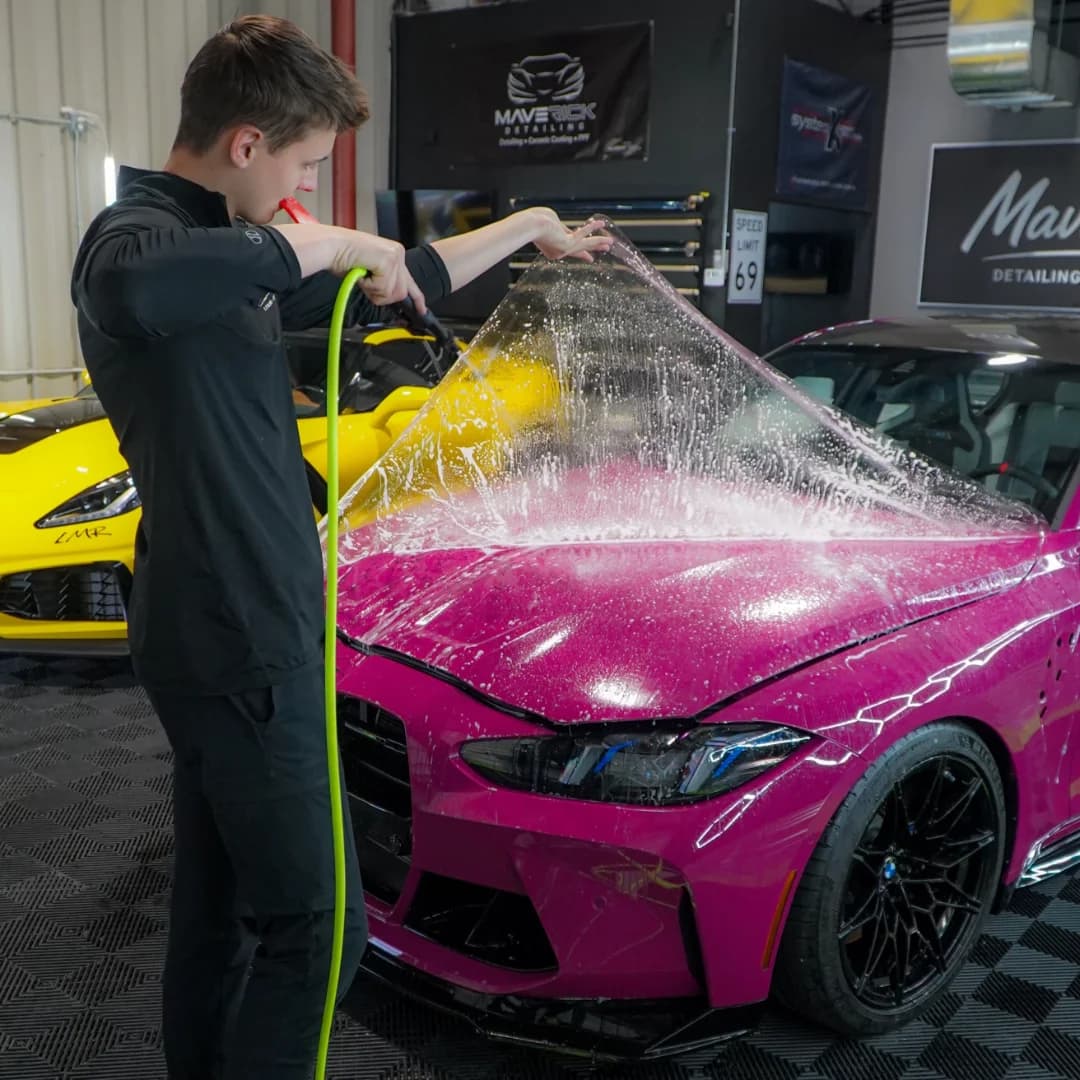
Paint Protection Film in Byron Center & West Michigan : Everything You Need to Know
If you’re considering Paint Protection Film (PPF) for your vehicle, understanding how it works and why it’s beneficial in West Michigan can help you make the right decision. In this guide, we’ll explain what PPF is, why it’s become one of the best ways to protect your investment, and why so many drivers in Byron Center, Ada, and the surrounding areas are choosing it for their vehicles.

Is Ceramic Coating Worth It in Michigan for Long Term Protection
A lot of people ask if ceramic coating is actually worth it, especially with Michigan weather. The short answer is yes, but only if it’s done right. Here’s what it really does and why it makes a difference.

How to Protect Your Car From Michigan Road Salt (What Actually Works)
If you live in Michigan, road salt is one of the biggest things destroying your vehicle. Most people rinse it off, but that’s not enough. Here’s what actually works to protect your paint and keep your car from getting beat up every winter.