How to Protect Your Vehicle Before a Michigan Winter: PPF, Ceramic Coating & More
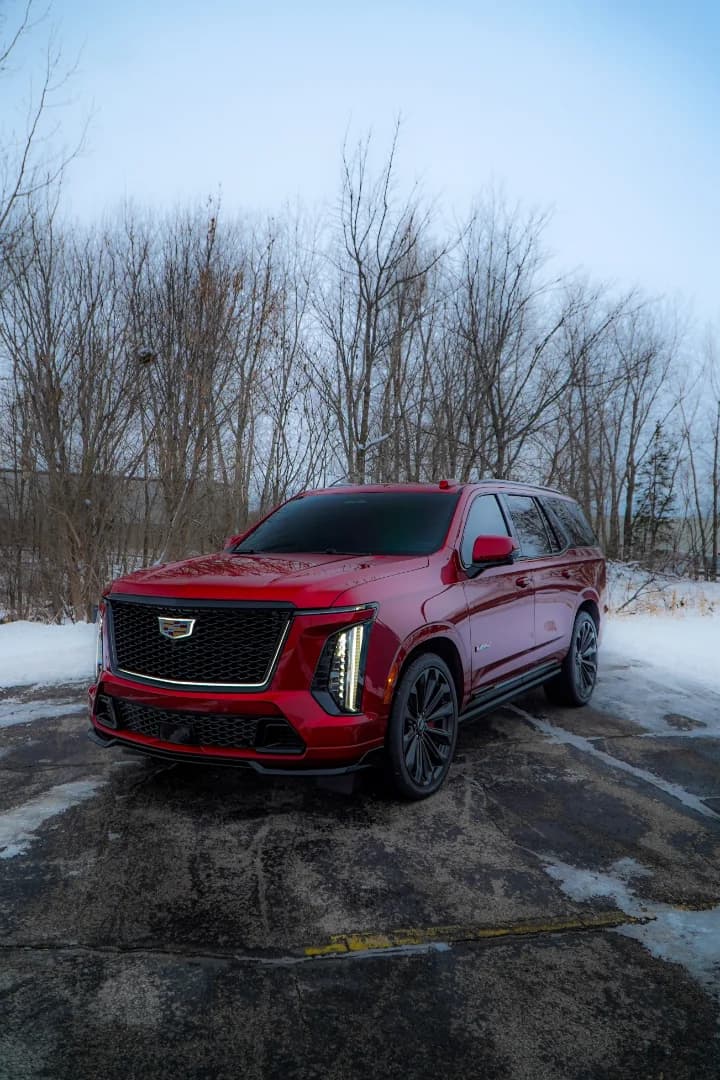
Michigan winters are brutal on vehicles, and waiting until the roads are covered in salt isn’t the best time to start thinking about protection. From Paint Protection Film and ceramic coating to wheels, glass, and proper winter washing, here’s how we recommend preparing your vehicle before winter hits West Michigan.
Every year around October, we start having the same conversation with customers.
“What should I do to protect my vehicle before winter?”
It’s a good question because Michigan winters aren’t easy on cars.
We’re dealing with road salt, sand, slush, snow, ice, constant moisture, dirty highways, and weeks where keeping a vehicle clean feels almost impossible.
If you drive around Byron Center, Ada, Grand Rapids, or anywhere else in West Michigan throughout the winter, your vehicle is going to get dirty.
There’s really no way around that.
But there’s a big difference between accepting that your vehicle will get dirty and doing nothing to protect it.
At Maverick Detailing, we’d rather prepare a vehicle before the first major snowstorm than try to undo months of winter abuse in the spring.
Here’s what we’d do.
Why Michigan Winter Is So Hard on Vehicles
Winter doesn’t introduce just one problem.
It’s a combination of things happening at the same time.
Road crews are treating roads.
Cars in front of you are throwing dirty water, salt, sand, and debris toward your vehicle.
Snow and slush are constantly collecting around lower panels and wheel wells.
Then your vehicle goes through repeated cycles of getting wet, freezing, thawing, and getting wet again.
Even on a sunny winter day, the roads can still be covered in leftover salt and grime.
If you’ve ever washed a black vehicle in January and driven five miles home only to find the sides gray again, you know exactly what we’re talking about.
That’s Michigan.
The goal of winter protection isn’t to somehow prevent your vehicle from getting dirty.
It’s to put protection between the vehicle and everything it’s about to encounter.
Start With the Paint
Your exterior paint is obviously one of the biggest areas to think about.
Throughout winter, contamination is constantly landing on the surface.
If the vehicle has little to no protection, keeping that surface clean becomes much more difficult.
That’s why fall is such a good time to inspect the paint, clean it properly, and get some form of protection on it.
How much protection?
That depends on the vehicle.
For some customers, a quality seasonal protectant makes sense.
For others, we’d recommend a professional ceramic coating.
And for people who want physical protection against road debris, that’s where Paint Protection Film comes into the conversation.
Paint Protection Film for Michigan Winter Driving
If rock chips bother you, PPF is one of the first things we’d consider.
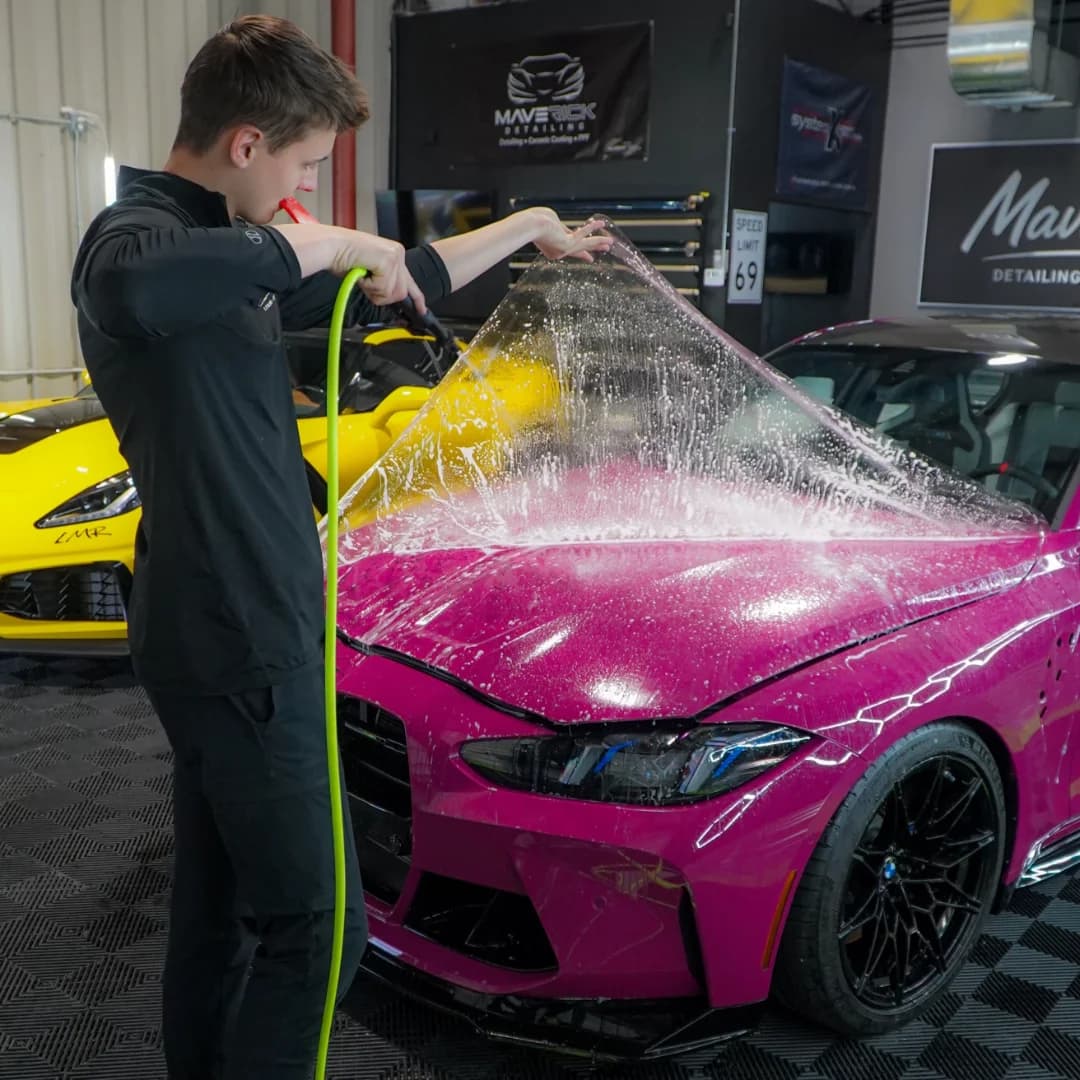
Paint Protection Film creates a physical layer over the painted surface.
Instead of road debris immediately impacting your factory paint, the film is there to take the abuse.
That’s especially valuable on the front of the vehicle.
Think about driving US-131 in January.
You’re behind trucks.
There’s sand and debris on the road.
There’s dirty spray coming off every vehicle around you.
And you’re traveling at highway speed.
Your front bumper, hood, fenders, and mirrors are sitting directly in the line of fire.
That’s why we like full-front PPF so much for Michigan daily drivers.
Do You Need Full-Body PPF for Winter?
Not necessarily.
Full-body Paint Protection Film is an incredible option for someone who wants maximum exterior protection, but we don’t think every daily driver automatically needs it.
For many vehicles, protecting the highest-impact areas gives you a really good balance.
That might mean:
Full front bumper
Full hood
Full front fenders
Mirror caps
Rocker panels
Other vehicle-specific impact areas
A truck with wide tires might need protection in different areas than a Tesla Model Y.
A sports car sitting extremely low to the ground has different vulnerabilities than an SUV.
That’s why we like looking at the actual vehicle before recommending coverage.
Ceramic Coating Is One of Our Favorite Winter Upgrades
If PPF handles physical impacts, ceramic coating tackles a different problem.
Maintenance.
A professional ceramic coating creates a durable protective surface that makes it more difficult for dirt and contamination to bond to the vehicle.
That’s something you really appreciate during winter.
Road grime still gets on the car.
Salt still gets on the car.
Snow still lands on it.
Ceramic coating doesn’t create some invisible force field around your vehicle.
What it does is make that mess significantly easier to deal with.
When it’s finally 35 degrees and you get a chance to wash the vehicle, having a properly coated surface can make the process much easier.
PPF and Ceramic Coating Together
For someone who really cares about protecting a vehicle, this is one of our favorite combinations.
PPF goes on the areas that are most likely to take physical impacts.
Ceramic coating protects the exterior surfaces from environmental contamination and makes maintenance easier.
They complement each other.
A good example would be a new vehicle that’s going to be daily driven year-round.
We might recommend full-front PPF to handle rock chips and road debris, then ceramic coating across the vehicle for easier maintenance.
Now you’ve addressed two completely different types of exposure instead of expecting one product to do everything.
Don’t Forget Your Wheels
Your wheels have a rough life during a Michigan winter.
They’re sitting extremely close to everything being thrown around underneath the vehicle.
Brake dust.
Road grime.
Salt.
Dirty water.
Snow.
All of it ends up on the wheels.
That’s why wheel protection is something we’d consider when preparing a vehicle for winter.
A ceramic coating on the wheels can make them significantly easier to clean and maintain.
For customers who want to take it further, we can remove the wheels and properly clean and protect areas that are difficult to access while they’re installed.
Is that necessary for every vehicle?
No.
But for someone who cares about keeping a nice set of wheels in good condition, it’s worth considering.
Glass Protection Matters Too
Visibility becomes even more important once winter hits.
Rain, snow, slush, dirty spray, and road grime are constantly hitting your windshield.
Glass coatings are designed to create hydrophobic behavior on the surface, helping water move away more easily and making the glass easier to maintain.
Again, this doesn’t mean you’ll never need your windshield wipers.
It means we’re trying to make the surface easier to keep clean in some of the worst conditions we drive through all year.
What About Window Tint During Winter?
Window tint probably isn’t the first thing you think of when someone says “winter protection,” but fall and winter can actually be a great time to get it done.
Ceramic window film isn’t just about making a vehicle look darker.
Quality ceramic film can provide UV protection and solar performance throughout the year.
Then when summer comes back around, the vehicle is already set up for those hot sunny days.
If you’re already bringing the vehicle in for PPF or ceramic coating before winter, tint can be an easy way to finish the package while it’s here.
Should You Detail Your Vehicle Before Winter?
Absolutely.
And this is one of the easiest things people overlook.
Think about what happens if you put a dirty vehicle away or head into winter with months of contamination already sitting on it.
You’re starting the harshest season of the year already behind.
We’d rather thoroughly clean the vehicle first.
Get the bugs off.
Clean the wheels.
Address contamination.
Clean out the interior.
Get the paint into good condition.
Then protect it.
It’s a much better starting point.
The Interior Takes a Beating Too
Michigan winter doesn’t stop at the exterior.
Snow-covered shoes.
Salt.
Mud.
Wet floor mats.
Dirty jackets.
Everything eventually ends up inside.
One of the biggest things we’d recommend is simply staying ahead of it.
Use quality floor protection.
Don’t let salt build up in the carpet for three months.
Vacuum regularly.
Clean spills and salt residue sooner rather than later.
Salt staining can become much more frustrating once it’s been repeatedly soaked into carpeting and allowed to dry.
A little maintenance throughout winter goes a long way.
Should You Wash Your Car During Winter?
Yes.
This is a big one.
Some people protect their vehicle in October and then essentially don’t touch it again until March.
That’s not what we’d recommend.
Protection makes maintenance easier.
It doesn’t replace maintenance.
If we get a stretch of warmer weather during winter, that’s a great opportunity to get the accumulated salt and grime off the vehicle.
You don’t necessarily need to chase a perfectly spotless car every three days.
The goal is simply not allowing months of contamination to continuously build up.
Be Careful With Automatic Car Washes
This is where winter gets tricky.
We completely understand why people use automatic washes when it’s 20 degrees outside.
Sometimes you just need the salt off the car.
But if maintaining the condition of your paint is a priority, we’d be cautious with brush-style automatic washes.
Those brushes are contacting vehicle after vehicle and can introduce swirl marks and scratches into the finish.
If your only realistic option is an automatic wash, a touchless wash can generally be the better choice from a paint-contact standpoint.
It may not clean as thoroughly as a proper hand wash, but it avoids physically dragging brushes across the paint.
For a properly protected vehicle, that can be a reasonable winter compromise.
What About Salt Underneath the Vehicle?
This deserves attention too.
PPF and ceramic coating are primarily protecting the surfaces they’re actually installed on.
They don’t magically protect the entire underside of the vehicle.
If you’re daily driving through Michigan winter, keeping excessive salt buildup off the underbody is still important.
That’s one reason an underbody rinse can be useful during winter maintenance.
Especially after periods where the roads have been heavily treated, getting accumulated grime and salt out from underneath the vehicle is worth thinking about.
When Is the Best Time to Protect a Vehicle for Winter?
Before winter.
It sounds obvious, but every year people wait until the first major snowstorm and then start thinking about it.
September, October, and November are great times to get ahead of things.
The roads haven’t been heavily salted yet.
The vehicle can be properly cleaned.
We can inspect the paint.
Any correction or preparation can be handled before protection is installed.
Then when winter actually arrives, you’re ready for it.
That said, if winter has already started, that doesn’t mean it’s too late.
We can properly clean and prepare the vehicle and go from there.
Earlier is simply easier.
What We’d Do to Our Own Daily Driver
If we bought a brand-new daily driver in West Michigan and knew we were driving it all winter, we’d keep the strategy pretty simple.
First, we’d get the vehicle completely cleaned and inspect the paint.
If rock chips bothered us, we’d install full-front PPF and add any vehicle-specific high-impact areas that made sense.
Then we’d ceramic coat the vehicle.
We’d consider coating the wheels and glass depending on how particular we were about maintenance.
We’d make sure the interior was cleaned and ready for winter.
Then we’d maintain the vehicle throughout the season instead of waiting until spring.
That’s it.
You don’t need fifteen different products.
You need the right protection in the right places and a reasonable maintenance plan.
What If My Car Gets Stored for Winter?
That’s a completely different situation, but protection still matters.
Before putting a vehicle away for several months, we’d want it clean.
Really clean.
We wouldn’t want bug residue, dirt, brake dust, or other contamination sitting on the vehicle all winter.
A proper pre-storage detail gives you the opportunity to put the vehicle away in great condition.
Then when spring comes around, you’re starting with a clean car instead of discovering everything that was left sitting on it for months.
For enthusiast and collector vehicles around West Michigan, this is something we do every fall.
You Don’t Have to Do Everything
This is probably the most important point.
Winter protection doesn’t need to become a massive project.
Maybe your vehicle just needs a thorough detail and quality protection before winter.
Maybe ceramic coating makes sense.
Maybe it’s brand new and you want full-front PPF.
Maybe you want to go all the way with PPF, ceramic coating, wheels, glass, and tint.
There’s no universal package.
At Maverick Detailing, we’d rather figure out what matters to you and build around that.
If you tell us you mainly care about keeping the vehicle easier to clean, we’re going to approach it differently than someone whose biggest fear is rock chips.
That’s how we’d want someone to treat us with our own vehicles.
Prepare Your Vehicle Before West Michigan Winter Arrives
Michigan winter is going to show up whether your vehicle is ready or not.
The roads are going to get salted.
The snow is going to come.
And at some point, every clean vehicle in West Michigan is going to turn gray.
We can’t change that.
What we can do is make sure your vehicle has the right protection underneath all of it.
Maverick Detailing provides professional Paint Protection Film, ceramic coating, paint correction, ceramic window tint, detailing, wheel and glass protection, and automotive styling for customers throughout Byron Center, Ada, Grand Rapids, Hudsonville, Holland, Zeeland, Grandville, Rockford, Grand Haven, and the surrounding West Michigan area.
If you’re wondering what your vehicle actually needs before winter, give us a call or send us a message.
Tell us what you drive, how much you drive it during winter, and what you’re most concerned about protecting.
We’ll tell you what we’d do if it were ours.
Maverick Detailing — Protect Your Investment.
More Articles
Paint Protection Film in Byron Center & West Michigan : Everything You Need to Know
If you’re considering Paint Protection Film (PPF) for your vehicle, understanding how it works and why it’s beneficial in West Michigan can help you make the right decision. In this guide, we’ll explain what PPF is, why it’s become one of the best ways to protect your investment, and why so many drivers in Byron Center, Ada, and the surrounding areas are choosing it for their vehicles.

Is Ceramic Coating Worth It in Michigan for Long Term Protection
A lot of people ask if ceramic coating is actually worth it, especially with Michigan weather. The short answer is yes, but only if it’s done right. Here’s what it really does and why it makes a difference.

How to Protect Your Car From Michigan Road Salt (What Actually Works)
If you live in Michigan, road salt is one of the biggest things destroying your vehicle. Most people rinse it off, but that’s not enough. Here’s what actually works to protect your paint and keep your car from getting beat up every winter.